Event image

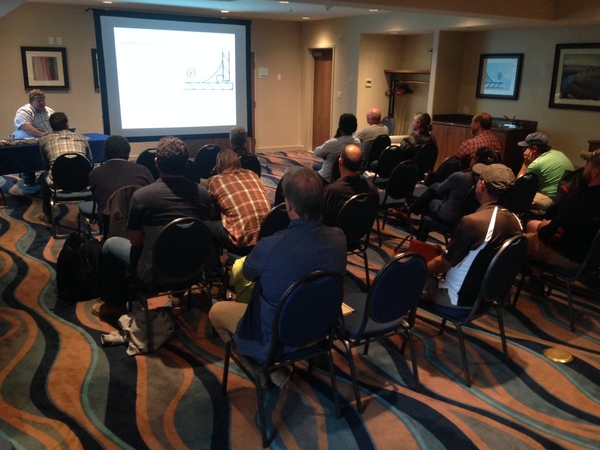
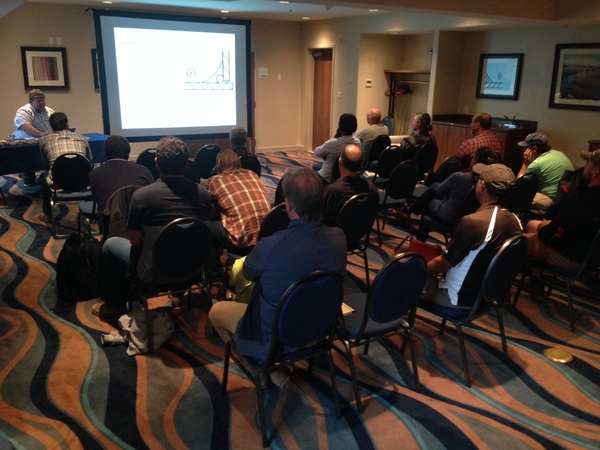
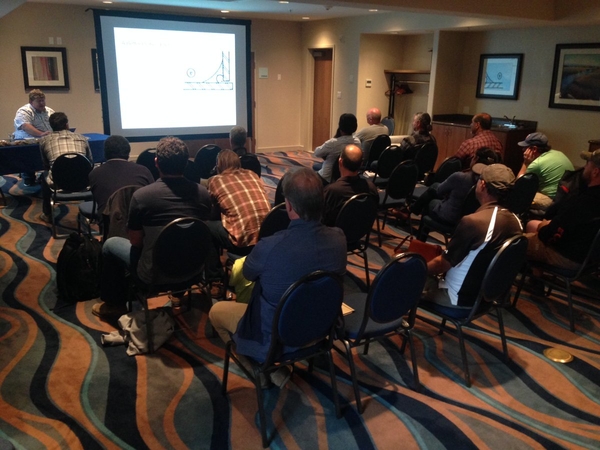
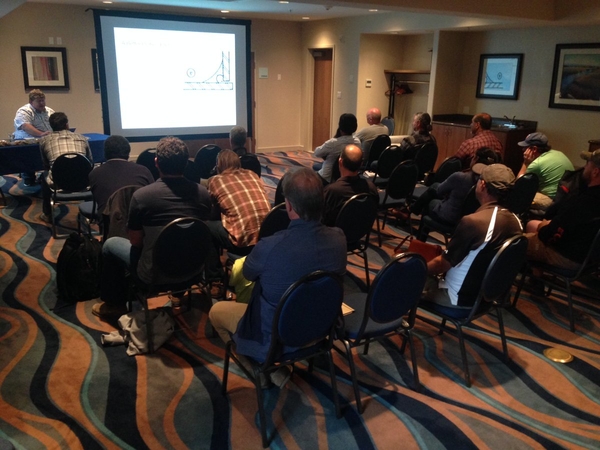
Building Affordable Homes 20 CPD Live

Live Seminar 20 CPD


Pre-Approved for 20 CPD by BC Housing

Building Affordable Homes

Available Live Seminar

20 one hour sessions to total 20 CPD Credits done over 4 days

Tues Nov 17th and Thurs Nov 19th

Tues Nov 24 and Thurs Nov 26

9am to 3pm for all dates Lunch Included


Keeping Small Structures Within Part 9 of the Code

How and When to Work with Professionals

The Role of Reference Standards

Part 9 Concrete Foundations

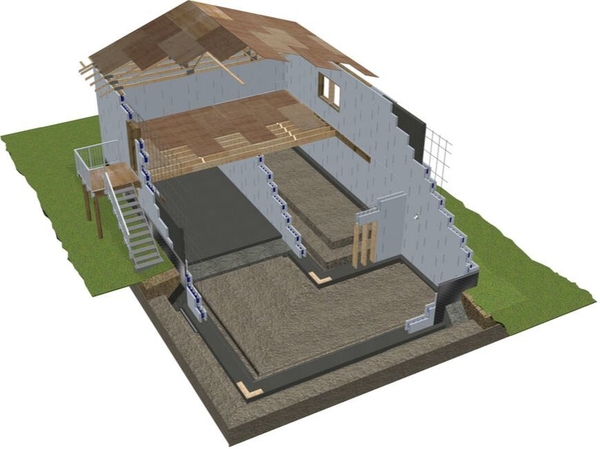
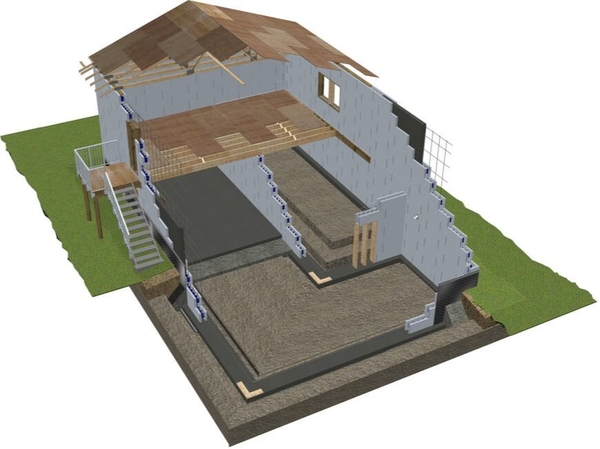
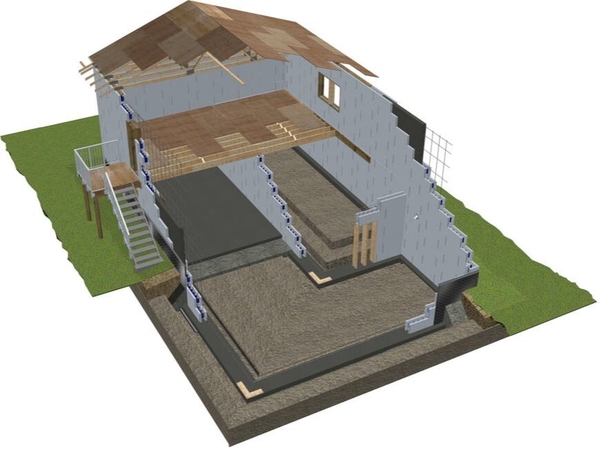
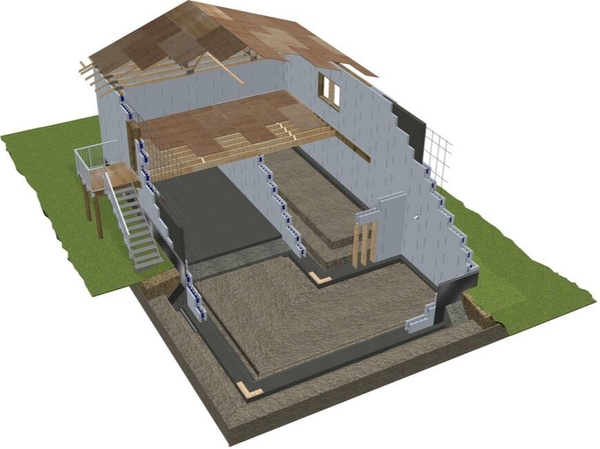
Part 9 ICF Foundations

Part 9 Lateral Load Provisions (General)

Part 9 Lateral Load Provisions (Foundation Pony Walls)

Part 9 Lateral Load Provisions (Plates & Rim Joists)

Part 9 Lateral Load Provisions (Braced Wall Panel Construction)

Part 9 Lateral Load Provisions (Connecting to the Roof)

Part 9 Lateral Load Provisions (Attached Garages, Carports & Porches)

Part 9 Lateral Load Provisions (Tall Walls & Stairwells)

Part 9 Lateral Load Provisions (Mezzanines, Dropped Ceilings, and other workarounds)

Separating Suites

Energy Efficiency & Carbon Reduction

Succeeding with Energy Efficiency

Using Modelling for Energy, Heat Loss/Gain, Cooling Provisions, & Earthquake/Wind Resiliency to Your Advantage

Building Enclosure Design Options & Opportunities

Tips & Tricks to Whole House Design

A Checklist for Design & Construction of Part 9 Homes


Read more
Sold Out

Part 9 Code Changes for the BC Building Code 2024:

On Demand Now

APPROVED BY BC HOUSING


ON SALE FOR DECEMBER - HAPPY HOLIDAYS !


20 CPD

10 Modules each 2 CPD to total 20 CPD for the entire course


AVAILABLE NOW - ON DEMAND


Significant changes to the energy requirements in the 2018 BCBC were made in May of 2023 (BC Building Code Revision 5) raising the minimum energy performance of newly constructed small structures in the Province to Step 3 of the Energy Step Code. This Revision also introduced SecIon 10.3 Greenhouse Gas Emissions providing a framework for identifing the GHG Emission Level of new small structures.

There have been many question within the construction industry resulting from this final revision to the 2018 Building Code. Building on these significant changes, it has been announced that the 2023 BC Building Code is anticipated to be adopted December 2023 effective date, pending ministerial approval. The additional changes that must be included for all projects permitting by as soon as March 2024


Home-Type Care Occupancies that fall under Part 9 would be subjected to provisions in the 2020 version of the National Fire Code (if adopted) but the impact of this will and a delayed approach to harmonization on this issue will be discussed.

This important and impactful learning will provide attendees with clear understanding of the changes from both the BCBC 2018 Revision 5, and the BCBC 2023 Change. This is not just a dry presentation of the changed words, this is a presentation designed to provide clarity through graphics and examples of the new provisions and how anyone involved in the construction industry at any level can be prepared for the changes and minimize the cost of confusion. Building the homes of the future requires significant evolution in the way we design, construct and inspect new homes that will perform with much greater energy efficiency, carbon accountability, and with improved safety for occupants.

Years of work at all levels of the development of these and future Code changes in Canada by the team at Building It Right are your assurance that attendees will come away with clarity and answers that will significantly reduce costly mistakes in the future. This is the 8th major Code Change cycle covered by the presenters. This content has been developed in conjunction with participation in National Joint task group iniIaIves and with the regulatory bodies Nationally and Provincially. 


Read more
Event image

Mechanicals # 1 The Basics Of Air - Online - 3.5 CPD

ON DEMAND WEBINAR
******

Session 1: The Basics of Air | 3.5 Hours Mechanical systems distribute air for ventilation and some heating and cooling systems also convect air. At the heart and soul of forced air systems and modern ventilation systems is the ducting and builders have often not paid enough attention to how ducting should be designed and installed. Worse still, many workers and sub-trades take drastic steps when trying to complete ducting installations into structures that have not been designed or constructed to provide effective and efficient ducting layout. It is no longer acceptable to just notch, cut, and nibble through the complex structure and building envelope, and it is also no longer acceptable to simply hope that air circulation will result in comfortable and safe living environments. This session looks specifically about the affects of duct size, run lengths, duct shape, duct sealing, field modification of ducting to work around the rest of the building. No conversation about the HVAC system can be beneficial until the basics of air are understood.

.

***This online course is available On Demand. There are no tests required***

Read more
Event image

CPD at Sea | Cruise & Learn Hawaii to Sydney

September 28 - October 17, 2027

Course: New Fall 2027 Course T.B.A.

Class takes place on Sea Days only.

Tahitian Treasures

On Day 12 of your cruise, you will become one of the few to cross the International Date Line (IDL). As you cross, time will jump ahead 24 hours if you are traveling west.

September 28, 2027

DEPART Honolulu Hawaii 5:00PM

CHECK IN STARTS AT 1200P

Sept 29 Sea Day (Class)

Sept 30 Sea Day (Class)

Oct 1 Sea Day

Oct 2 Sea day (Class)

Oct 3 Sea Day

Oct 4 Moorea, French Polynesia

Oct 5 Papeete, Tahiti

Oct 6 Raiatea, French Polynesia

Oct 7 Sea Day

Oct 8 Sea Day(Class)

Oct 9 Sea Day International Date Line

Oct 10 Sea Day (Class)

Oct 11 Sea Day

Oct 12 Tauranga, New Zealand

Oct 13 Aukland, New Zealand

Oct 14 Bay of Islands, New Zealand

Oct 15 Sea Day

Oct 16 Sea Day

Oct 17 Disembark Sydney, Australia


Aqua A2 Cost is $6272 CAD per person 

Concierge C1 Cost is $6180 CAD per person

Concierge C2 Cost is $5555 CAD per person

Veranda V3 Cost is $5084 CAD per person

Veranda V4 Cost is 5071 CAD per person

Inside IA Cost is $3995 CAD per person. 

The above pricing is per person based on two people sharing in the stateroom. It includes the Beverage Package , Free WIFI and a $50 US on board spending credit per cabin. 

Bookings with in the group the deposit is $960 CAD per cabin and is refundable up until the final payment date which is May 31 2027. 

Our cruise specialist will work with you to make this a memorable event. Spaces are limited so reserve your spot early! Need more info?

Read more

HIABC | Course Code Fund 1.01W | The Building Science of a Home - Part 1: Condensation and the Mechanism of Moisture Flow

HIABC On Demand Webinar 1.01W
*Now available 24/7! Anywhere you have internet access!*

This 1 CPD credit on demand module is Part 1 of 4 modules derived from Fundamentals 1, developed and presented by Murray Frank of Constructive Home Solutions.

In the past, changes in construction methods and materials were minor and happened infrequently. It was fine to rely on ‘trial by time’ to prove what worked. Modern construction sees dramatically different methods and materials with changes so quick, almost every home built is unique. Only Building Science can predict accurately what will work. This session will empower you to avoid costly mistakes. This module is A focus on the role of vapour diffusion control vs. the role of airtightness in controlling condensation within Part 9 construction.Click here for more course information

*Please note that while this is a standalone module, you will receive the most benefit by taking all 4 modules of this session.*
Read more
Event image

CPD at Sea | Cruise & Learn Mexican Riviera 2028

March 12 - March 19, 2028

Course: New Fall/Winter Course T.B.A.

Class takes place on Sea Days only.


March 12, 2028

DEPART Los Angelas 5:00PM


Sea Day (Class)

Sea (Class)

Puerto Vallarta

Mazatlan

Cabo

Sea (Class)


Embark Los Angelas


Our cruise specialist will work with you to make this a memorable event. Spaces are limited so reserve your spot early! Need more info?

Read more
Event image

HIABC Mechanicals # 6 Free Clean Power - Renewable Energy Sources in Homes - Online - 3.5 MRC

ON DEMAND WEBINAR
***Session 6: Free Clean Power - Renewable Energy Sources in Homes | 3.5 Hours***

The state of the art in Photovoltaic is evolving quickly. When the choice to add PV to a home is made, the next 25 years of power is being purchased, in essence, “up front”, With technology getting better every year and the cost per kWh dropping and energy costs rising, when does it make sense to jump in? This session looks at the practical requirements for PV installations, some recent costing data, a review of PV in real world BC installations and the technology options for both grid-tied and off-grid systems. A discussion about ramping the value of renewable energy installations with other high efficiency choices will highlight the complexity of over-all energy efficient design and construction. This session will even peak into alternate renewables such as wind, solar thermal, passive solar heating, and run-of-river. For now, it looks like PV is king but the future may hold some new truths and surprises as the public’s opinions evolve. What are truly the lowest environmental impact design choices and is energy efficiency actually an assurance of environmentally positive benefits or is energy efficiency truly driven by economic factors?

***This online course is available On Demand. There are no tests required***

Read more
Event image

HIABC Mechanicals # 2 Ventilation Why and How - Online - 3.5 MRC

ON DEMAND WEBINAR
***Session 2: Ventilation - Why and How | 3.5 Hours***

With the basics of ducting and airflow understood, the next challenge in mechanical design is effecting ventilation and as we move forward with high energy efficiency we must also begin to examine the importance of air circulation and energy recovery from the exhaust air as fresh air is brought into the home for comfort, safety, and the protection of the building structure and sensitive contents and finishes. Session 2 focuses on various code-conforming ventilation strategies and energy recovery strategies while introducing advanced controls and air circulation options that can also be factored into homes. Heat recovery ventilators, energy recovery ventilators, central recirculating systems and basic supply/exhaust options will be included. An exploration of ventilation strategies that can evolve with the home as energy costs and code requirements evolve will supplement the examination of emerging ventilation technologies that may become code referenced in the future as well as minimalistic approaches for small homes in milder climate locations.

***This online course is available On Demand. There are no tests required***

Read more
Event image

HIABC Mechanicals # 3 Heating and Cooling, From Hearth to Heat Pump - Online - 3.5 MRC

ON DEMAND WEBINAR
***Session 3: Heating and Cooling, From Hearth to Heat Pump | 3.5 Hours***

Mis-sized and overly-costly heating and cooling choices do not benefit anyone. They often cost more to install, can result in extraordinary maintenance and renewals costs, and may still fall short of delivering 12 month comfort for residents..Understanding the heat-loss calculation for a home is the foundation of Heating and Cooling design and will be summarized in this session. Building on right-sizing choices, this session goes a bit outside of the box to fully explain (in simple but revealing ways) the concepts of operation including challenges and opportunities that will help attendees to make the best choice of systems for the builder and the occupant. Forced Air, Heat Pumps, Radiant Systems and even passive systems and the good old fashion wood burner will be discussed and the best systems moving forward may be very different that what has been typically chosen in the past.

***This online course is available On Demand. There are no tests required***

Read more
Event image

HIABC Fall/Winter Series 2019 Cladding # 4 ONLINE 3.5 MRC

ONLINE - ON DEMAND WEBINAR
***Fee for this course is $155***

***ONLINE - ON DEMAND WEBINAR 3.5 MRC***

Session 4: Installing moderately heavy cladding including stucco

Structural attachment with exterior insulation and moderately heavy cladding, conventional stucco systems on stucco backer or K lath, modified stucco finishes on cement board (STO), Exterior Insulation and Finish System (EIFS) on Mass Wall, control joints, flashings, trim and transitions, and fasteners for moderately heavy cladding attachment.

Read more
Event image

Asbestos Awareness Online

Asbestos Awareness Online

***Asbestos Awareness Online - 2.5 CPD Credits***

Asbestos is a naturally occurring group of minerals. It was used in nearly 3000 construction products due it's characteristics. Asbestos fibres added strength, heat resistance and chemical resistance. Asbestos was determined to be a hazardous material. If employers and workers do not take appropriate precautions for work around asbestos, workers may develop serious chronic health problems or even die of an asbestos related disease.

This asbestos hazard awareness presentation provides information about asbestos containing building materials encountered in both building renovations & demolition. The presentation will assist contractors in identifying asbestos containing building materials that may impact their work and or workers. Contractor's & workers will learn about complying with WorkSafeBC regulations governing asbestos in the workplace, the hazards associated with asbestos, asbestos containing building materials encountered during home renovations and demolitions and an overview of the procedures used to clean-up and or remove the asbestos containing materials.


2.5 CPD Credits

Read more
Event image

HIABC Mechanicals # 4 Plugging the Holes - Inviting In Free Energy, and Trapping Escaping Energy - Online - 3.5 MRC

ON DEMAND WEBINAR
***Session 4: Plugging the Holes - Inviting In Free Energy, and Trapping Escaping Energy | 3.5 Hours***

Interestingly, it has become evident that traditional thinking about mechanical systems and their role in more energy efficient homes begins to fall apart when we look at Net Zero homes and beyond. There are passive solutions to energy recovery of ventilation air, there is great reduction in heating and cooling devices (both capital and operating costs) as the building enclosure gets tighter and more thermally resistive. Where is the balance between more costly mechanical and more effort in the design and construction of the building envelope? Why does falling snow stick to the ground last over the manhole covers in the streets? Can power controlled louvre windows be used to naturally ventilate the home while providing stack cooling and even night purging of heat? The answers lie in knowledge and in undertaking careful design that can bring passive comfort and ventilation into the home with little or no energy requirement.

***This online course is available On Demand. There are no tests required***

Read more
Event image

ICF Session 5 ON DEMAND

ON DEMAND
ICF

SESSION 5: MANUFACTURERS OPTIONS BELOW GRADE

The session will present an introduction to a cross-section of specific available manufacturers proprietary systems and industry support resources for the new and veteran user of ICF for below grade walls. An examination of the specific manufacturers requirements, accessories, and particular methods to ensure that the installation of specific systems conforms with the requirements outlined in Part 9. This session goes further to explore expanded capabilities when using specific ICF blocks with the assistance of professional design and oversight.

Read more
Event image

ICF Session 1 ON DEMAND

ON DEMAND
ICF Session 1

Session 1: ICF Below Grade

This session leads off with an overview of a generic ICF block Insulating Concrete Form (ICF) system including Part 9 reinforcement, concrete placement and transition and penetration detailing. The requirements relating to footing design and construction, damp proofing and waterproofing, reinforcement, openings for pipes, electrical, basement windows and doors, as well as transition details to various walls above grade (including ICF), ledger attachments, and concrete placement/consolidation will be examined in detail. Advanced CGI graphics, photo’s and video will help to explain the basics of ICF in below grade applications. Tips, tricks and qualify assurance information will also be presented.

Read more
Event image

ICF Session 4 ON DEMAND

ON DEMAND
ICF

Session 4: The Continuity of the Enclosure With ICF

The house as a whole, or system, is the new language of designers and builders. With advanced energy efficiency comes the need for a finely balanced approach to every choice; from fenestration, to mechanical, to thermal layers, and the continuity of the planes of protection. ICF is a robust and highly durable building system and can be more forgiving when exposed to excessive environmental loads, but too much of anything one element can quickly have a very negative effect on affordability and even performance. This session will dive into continuity of the planes of protection and discuss balanced approaches to the whole house design. This will highlight some very interesting and somewhat unexpected changes in how we design and built these homes.

Read more
Event image

ICF Session 3 ON DEMAND

ON DEMAND
ICF

Session 3: The Energy Advantage of ICF

Once upon a time, an R value was an R value. It was a measure of the thermal resistance of an insulating material or layer. When our walls were effective R 2 (2 x 4 with no insulation), or R 4 (when we filled those walls with sawdust and other interesting materials) or R 8 (with 2 x 4 batt) and then R 16 (2 x 6 walls with batt), the effective insulating value of the entire wall assembly was reasonably close to the value of the insulation that we used to improve that performance. This session explains how energy performance must now be evaluated as we move towards Net Zero homes by 2032, and how the actual thermal performance of ICF has always been significantly greater than the nominal R value of the polystyrene ICF forms themselves. Thermal massing, effective insulation values and many other mysteries will be clearly and simply explained. This will also provide the tools to understand why ICF has always delivered much higher thermal performance and high lateral load resistance but is only now getting the credit it deserves under the recent evolution of building codes in Canada.

Read more

No more events to load